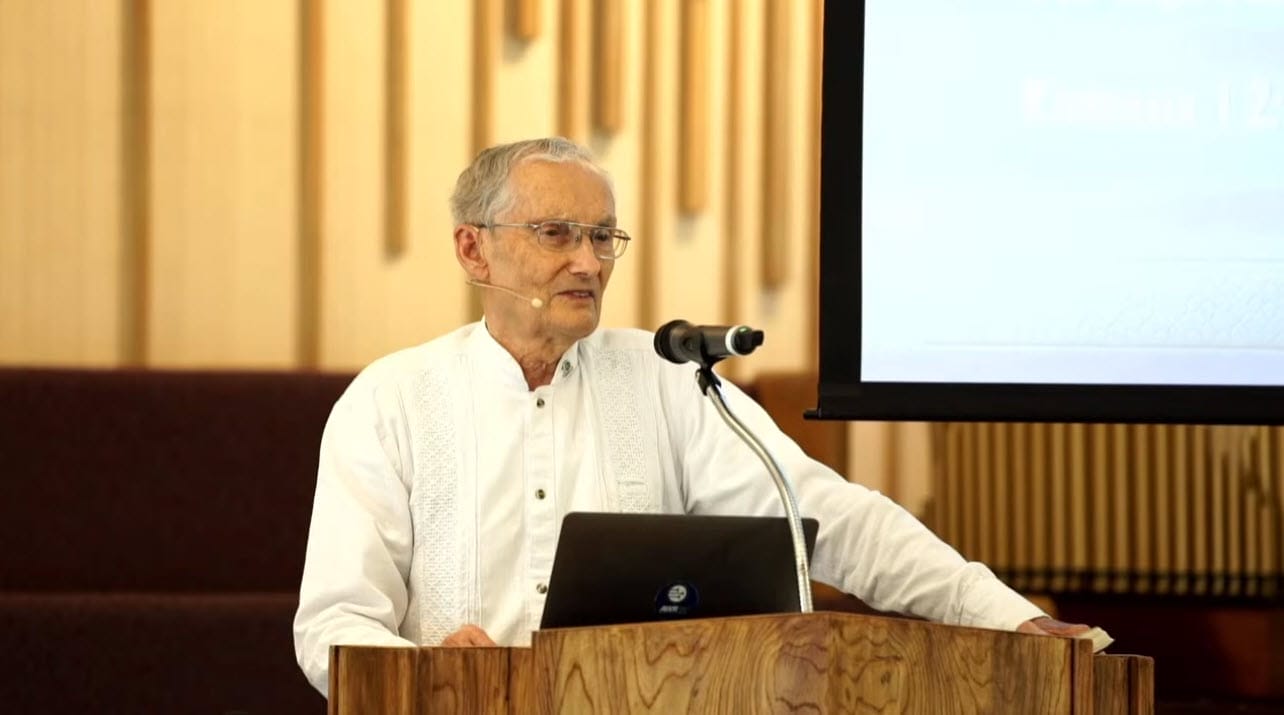
Central focus: The sermon centered on the story of Naomi (from Ruth), the experience of “bitter” waters (Mara), and how God redeems bitterness into blessing and purpose — often using suffering to accomplish His greater plan. The message draws connections between Biblical instances of bitterness and spiritual lessons about God’s providence, healing, and calling.
Key points:
- Naomi’s Bitterness
- Naomi lost her husband and two sons while living in Moab; upon returning to Bethlehem she asked to be called “Mara” (meaning “bitter”).
- Naomi’s grief and complaints reflect real human pain and the tendency to rail at God in seasons of suffering.
- The Waters of Mara (Exodus)
- The Israelites found water that was bitter at Mara; God instructed Moses to cast a tree into the water and it became sweet.
- Ellen G. White’s commentary (from Spirit of Prophecy / Ministry of Healing passages referenced) interprets the episode as a moral/physical lesson: sin brought disease and suffering, and God used trials to teach obedience and dependence on Him.
- There was an aside that the “tree” some scholars suggest might be moringa, which has properties that can purify water—though the speaker treats it as a possible natural explanation consistent with divine providence.
- Myrrh as a Symbol
- Myrrh is discussed both as a literal aromatic/resin with medicinal and embalming properties and as a symbolic element in Scripture (e.g., Psalm 45:8; the gifts of the Magi included myrrh).
- The speaker links myrrh’s bitterness and its healing/fragrant properties to the idea that God can turn bitter experiences into instruments of blessing and healing.
- God’s Provision Through Trials
- The sermon emphasized that God uses affliction to teach and to weave people into His redemptive plan (Naomi’s story ultimately becomes part of Jesus’ lineage through Ruth and Boaz).
- The speaker read and referenced passages from Ellen G. White (Ministry of Healing, Spirit of Prophecy) about God’s desire to teach and preserve His people and to provide healing.
- Spiritual Practices to Overcome Bitterness
- Four practical responses were recommended for those experiencing “Mara” (bitterness):
- Prayer — seek God’s help.
- Praise — remembering God’s faithfulness and practicing thanksgiving.
- (Implicit in the sermon) Trust — acknowledging God’s plans and provision.
- Service — stepping into God-given opportunities, even when they require leaving comfort zones.
- The sermon included a short discussion of neurobiology: practicing gratitude and praise can rewire the brain (hippocampus, prefrontal cortex, reduced amygdala activation), lowering stress and improving mood — tying spiritual practices to physiological benefits.
- The speaker urged listeners to let God convert bitterness into strength, to obey God’s calling (the speaker shared personal testimonies of obedience and God’s provision), and to trust that God makes provision for new places and callings.
- Four practical responses were recommended for those experiencing “Mara” (bitterness):
- Calling and Provision
- Personal stories were given (moving to a new place, being invited unexpectedly to a Sabbath meal) to illustrate that when God calls someone to a new ministry or location, He has already prepared provision there.
- The narrative of Naomi ultimately being used in the lineage of Christ was cited as a powerful example of God turning tragedy into part of His redemptive plan.
Conclusion:
- The sermon closed with encouragement to trust God, to respond in prayer, praise, and service, and to allow God to transform bitterness into blessing and purpose.
- Final prayer asked God to continue His work in the congregation and to provide courage and obedience in following His call.